
Research Areas
Arid Environments
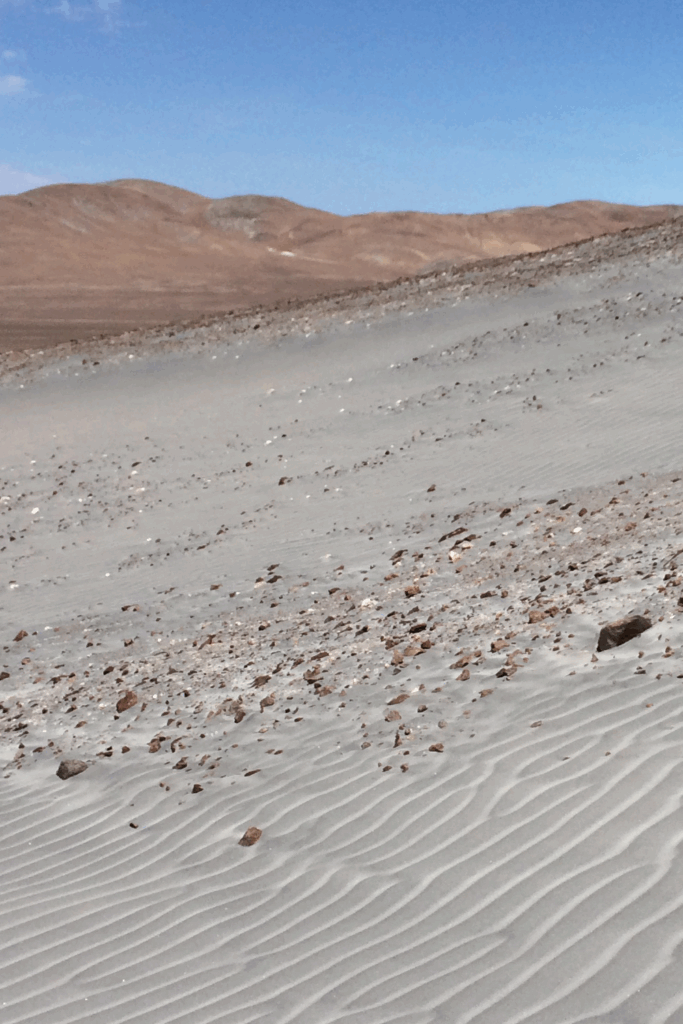
I study Earth’s arid environments as a way to better understand how life adapts to severe water shortage. Using this knowledge, it is possible to predict how life could exist on a planet outside Earth, like Mars. Additionally, planets outside our solar system (exoplanets) may have global deserts, and I study the possible climates of these worlds, and how life may adapt to the arid conditions.
Photo: The hyperarid region of the Atacama Desert in South America. This desert is one of the driest places on Earth, receiving roughly 100 times less rain than Phoenix, Arizona, USA. (photo by me).
Selected Papers
DM Glaser, HE Hartnett, H Cadillo-Quiroz, D Finn, S Perez-Montaño and SJ Desch. 2022. Water Vapor Adsorption Provides Daily, Sustainable Water to Soils of the Hyperarid Atacama Desert. Astrobiology.
DOI: 10.1089/ast.2021.0171
Exoplanet Habitability
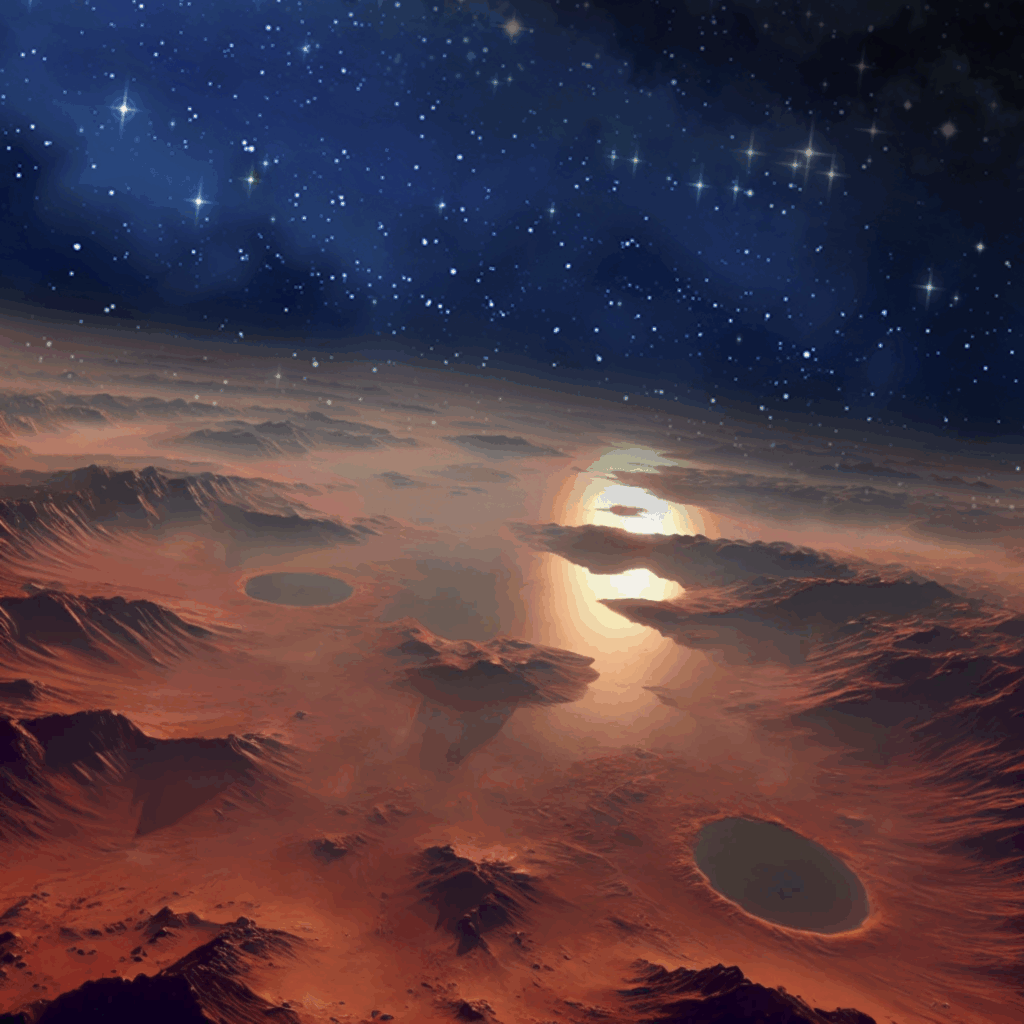
I study the potential climates of exoplanets by applying our knowledge of Earth’s climate to planets outside the solar system. Exoplanets may have completely different climate compared to Earth considering the differences in star type (cooler star), distance from star (closer or further), axial tilt (no seasons), greenhouse gas content (warming or cooling), etc. Many of these factors are unknown, so I investigate likely scenarios to understand the effects on habitability for potential life.
Photo: an AI-generated image of an exoplanet with an arid surface. We dont know what the surface of any exoplanet looks like, however, it is plausible that an exoplanet may have an extremely dry surface.
Selected Papers
DM Glaser, I Aleinov, T Leboissetier, and M Way. 2025. Continental Orientation and the Climate of Land-Dominated, Arid Planets. The Planetary Science Journal.
DOI:10.3847/PSJ/adccb6
MJ Styczinski, ZS Cooper, DM Glaser, O Lehmer, V Mierzejewski, and J Tarnas. The Astrobiology Primer 3.0: Chapter 7: Assessing Habitability Beyond Earth. Astrobiology.
DOI: 10.1089/ast.2021.0097
Biosignatures
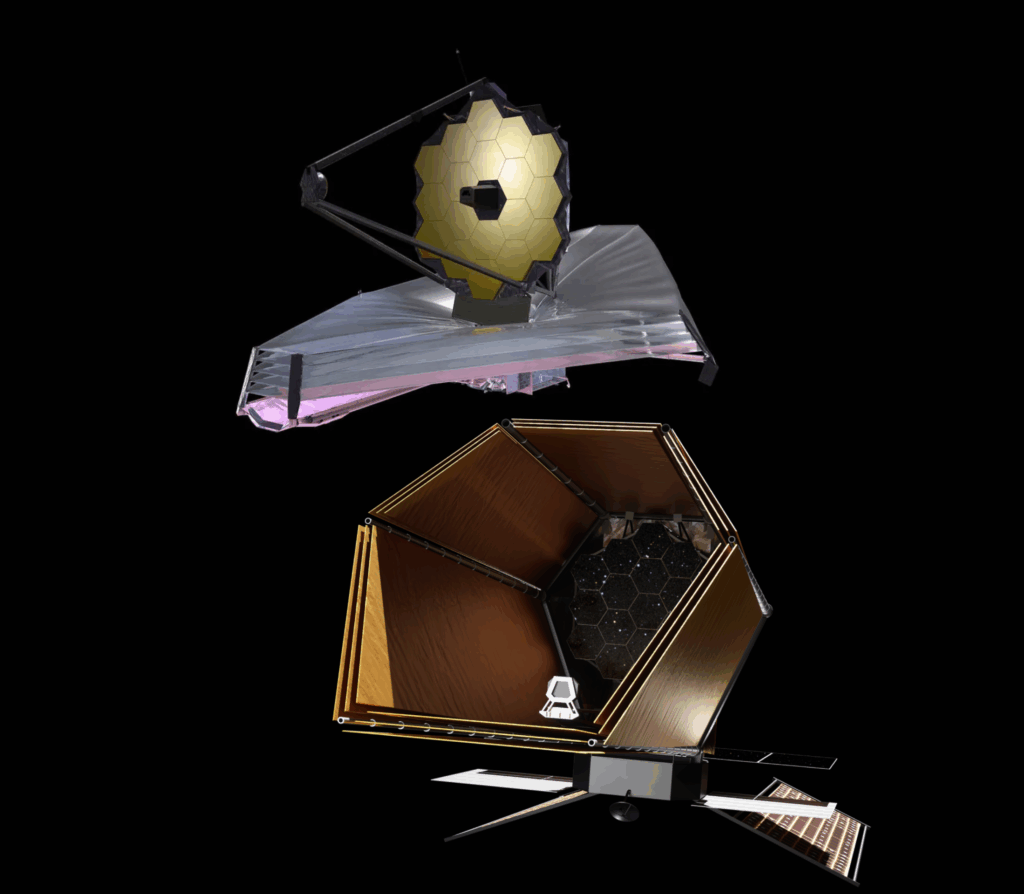
Using our understanding of life on Earth, and its atmospheric fingerprints, we can predict what signs of life may look like on another planet. Earth, as viewed by an observer outside our solar system, would be a “smoking gun” for the existence of life considering the high concentration of oxygen and oxygens coexistence with methane. I study how climate affects the life (and its biosignatures), and how life itself may stabilize a planets climate.
Photo: JWST (top) is the current state-of-the-art telescope that is capable of searching for biosignatures of exoplanets. HWO (bottom) is the next generation telescope that will improve the capability to search for biosignatures on exoplanets around Sun-like stars.
Selected Papers
DM Glaser, S Desch, HE Hartnett, C Unterborn, AD Anbar, et al., 2020. Detectability of Life Using Oxygen on Pelagic Planets and Water Worlds. The Astrophysical Journal.
DOI: 10.3847/1538-4357/ab822d
All Publications
-
2026
- Journal Article Euhabitability: A New Term to Aid in the Search for Life in Addition to the Habitable Zone Framework Space Science Reviews DOI: 10.1007/s11214-026-01315-5
- Journal Article Water Versus Land on Temperate Rocky Planets Space Science Reviews DOI: 10.1007/s11214-025-01264-5
-
2025
- Journal Article Continental Orientation and the Climate of Land-dominated, Arid Planets The Planetary Science Journal DOI: 10.3847/PSJ/adccb6
-
2024
- Journal Article Chapter 11: Astrobiology Education, Engagement, and Resources Astrobiology DOI: 10.1089/ast.2021.0098
- Journal Article Chapter 7: Assessing Habitability Beyond Earth Astrobiology DOI: 10.1089/ast.2021.0097
- Journal Article Chapter 1: The Astrobiology Primer 3.0 Astrobiology DOI: 10.1089/ast.2021.0129
-
2022
- Journal Article Water Vapor Adsorption Provides Daily, Sustainable Water to Soils of the Hyperarid Atacama Desert Astrobiology DOI: 10.1089/ast.2021.0171
-
2020
- Journal Article Detectability of Life Using Oxygen on Pelagic Planets and Water Worlds The Astrophysical Journal DOI: 10.3847/1538-4357/ab822d